
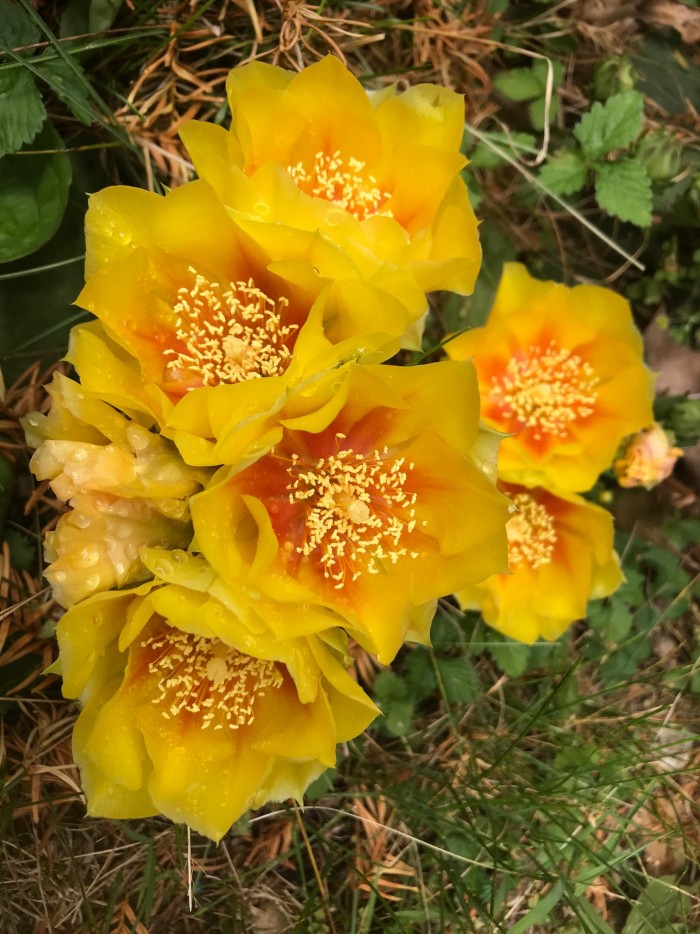


- [私の心の随筆] <冬と春の間で>1392026.03.12
- [내 마음의 隨筆] AI(人工知能) 시대(時代)에 왜 최립(崔岦)인가1952026.03.16
- [An Essay from My Heart] Why Choi Rip in the Age of AI1402026.03.16
- [내 마음의 隨筆] <시대정신을 의심하라: Zeitgeist을 넘어서는 최립(崔岦)의 정관>1572026.03.17
- [私の心の随筆] AIの時代に、なぜ崔岦なのか1242026.03.16
[An Essay from My Heart] Why Choi Rip in the Age of AI
2026.03.16[An Essay from My Heart]
Today we live in an age in which AI (Artificial Intelligence) assists—and sometimes even replaces—human thinking. Algorithms analyze vast amounts of information in an instant, machines calculate faster than humans, and the accumulation of knowledge proceeds at a speed unprecedented in any previous era. The advancement of technology is dazzling, yet within this rapid transformation humanity encounters new questions.
The question is simple yet profound: What is truly human intelligence? In an age when technology expands human capability, where does the depth of human reflection come from? At this point we are naturally led to revisit the roots of the humanistic tradition and intellectual heritage.
In confronting such questions, one historical figure from the middle period of the Joseon dynasty comes to mind. He was not merely a literary figure but also a poet, philosopher, educator, and thinker. That person is Choi Rip (1539–1612).
Choi Rip was one of the representative intellectuals of mid-Joseon Korea. He deeply explored the relationships among scholarship, literature, nature, and humanity. When we examine his life and writings, we see that he was not confined to a single academic field but moved freely across a broad intellectual world, embodying what we might call a Renaissance-type scholar.
When reading his works, the first impression one receives is the depth of his reflection. He contemplated the human heart while observing nature and expressed the meaning of life within short poetic lines. Such contemplation represents a dimension of intellectual activity different from the rapid processing of information.
AI can analyze data and generate sentences. Yet the human experience of contemplating life while observing nature cannot be created by calculation alone. The reason Choi Rip’s poems and prose continue to be read today lies in their profound human insight.
Another characteristic of Choi Rip’s thought is the attitude of quiet contemplation. Rather than rushing to judge the world, he observed it calmly and sought to understand its meaning. Such an attitude becomes even more valuable in an age dominated by the speed of information.
In modern society, countless streams of information constantly flow toward us. Every day we encounter hundreds of messages, news reports, and data points. Yet in this flood of information, the time for deep thinking grows increasingly scarce.
When we read Choi Rip’s writings, we naturally slow down. His poems are not long, yet within them lies the time of long reflection. There is a power in his literature that makes us pause and think after reading just a single line.
Choi Rip was also a thinker who deeply understood the relationship between nature and humanity. In his poetry, mountains, rivers, wind, and moon are not merely natural scenery. They appear as presences that resonate with the human heart.
This perspective—understanding humanity through observing nature—is an important feature of the East Asian humanistic tradition. The attitude of reflecting on human life through nature retains deep meaning even today, when we increasingly confront questions of environment and ecology.
Another notable feature of Choi Rip’s thought is his ability to transcend boundaries. He did not separate literature from philosophy. Within poetry there was philosophy, and within philosophy there were stories of life.
Today academic disciplines are increasingly specialized and fragmented. Yet solving complex problems often requires integrated thinking that connects diverse fields. In this sense, Choi Rip’s intellect closely resembles the interdisciplinary thinking emphasized in the modern world.
In the age of AI, what matters most to humanity is not simply the quantity of knowledge. More important is the ability to connect different domains and discover new meaning. Such capacity arises from the creative reflection unique to human beings.
Choi Rip’s life also demonstrates the unity of scholarship and life. The values he expressed in his writings were ones he sought to embody in his daily life. His thought was not merely theoretical but a lived attitude.
Today we possess enormous knowledge, yet wisdom connected to life itself seems to diminish. When knowledge fails to illuminate life, it remains merely information.
Choi Rip’s writings invite us to reconsider the meaning of wisdom. Wisdom may not simply be knowing many things, but understanding the meaning of life deeply. Such insight does not disappear even when eras change.
AI can calculate faster than humans and store vastly more information. Yet the ability to understand human life and reflect on its meaning remains fundamentally human.
For this reason, we returned to Choi Rip today. In his writings lies the depth of human spirit that transcends the age of technology.
Thus, we ask again: Why Choi Rip in the age of AI? The answer may be simple. No matter how advanced technology becomes, human beings remain creatures who think and reflect.
And among those who most beautifully demonstrate the depth of human reflection is Choi Rip. Reading his works is not merely remembering a scholar of the past; it is rediscovering the human spirit within the technological age. ***
March 16, 2026
At Sungsunjae (崇善齋)
{Solti}
한국어 번역: https://www.ktown1st.com/blog/VALover/348622
日本語 飜譯: https://www.ktown1st.com/blog/VALover/348624


-
 Buy Kpods Vape, buy Etomidate Pods ,order Etomidate,space oil ,CAS: 33125-97-2,order tiletamine , bu
Buy Kpods Vape, buy Etomidate Pods ,order Etomidate,space oil ,CAS: 33125-97-2,order tiletamine , b…
Buy Kpods Vape, buy Etomidate Pods ,order Etomidate,space oil ,CAS: 33125-97-2,order tiletamine , bu
Buy Kpods Vape, buy Etomidate Pods ,order Etomidate,space oil ,CAS: 33125-97-2,order tiletamine , b…
-
 [내 마음의 隨筆] 언어 장벽이 사라진 시대, 우리는 더 잘 이해하고 있는가 - 1 of 2
최근 자동번역 기술의 급속한 발전은 우리의 일상을 조용하지만 근본적으로 바꾸고 있다. 특히 X (구 Twitter)에서 도입된 실시간 번역 기능은 서로 다른 언어를 사용하는 사람…
[내 마음의 隨筆] 언어 장벽이 사라진 시대, 우리는 더 잘 이해하고 있는가 - 1 of 2
최근 자동번역 기술의 급속한 발전은 우리의 일상을 조용하지만 근본적으로 바꾸고 있다. 특히 X (구 Twitter)에서 도입된 실시간 번역 기능은 서로 다른 언어를 사용하는 사람…
-
 미국 한인교회 이야기
https://youtu.be/erhWfwoUeC4?si=gDBcIwy6oe36Cnfz
미국 한인교회 이야기
https://youtu.be/erhWfwoUeC4?si=gDBcIwy6oe36Cnfz
-
 향후 2~3년 입시를 뒤바꿀 여름방학 8주의 골든타임 로드맵
다가오는 여름방학 8주를 어떻게 보내느냐가 우리 아이의 향후 2~3년 입시 경쟁력을 완전히 뒤바꿔 놓습니다. 대학 입시의 성공과 실패는 사실상 여름방학에 결정된다고 해도 과언이 …
향후 2~3년 입시를 뒤바꿀 여름방학 8주의 골든타임 로드맵
다가오는 여름방학 8주를 어떻게 보내느냐가 우리 아이의 향후 2~3년 입시 경쟁력을 완전히 뒤바꿔 놓습니다. 대학 입시의 성공과 실패는 사실상 여름방학에 결정된다고 해도 과언이 …
-
 How to Buy Osimertinib 80 mg Tablet Online in Philippines
Where to Buy Osimertinib Tablet Online in the PhilippinesAccess to essential medicines can often fe…
How to Buy Osimertinib 80 mg Tablet Online in Philippines
Where to Buy Osimertinib Tablet Online in the PhilippinesAccess to essential medicines can often fe…
-
 영광셔츠룸 만남★라인:LUP25★영광출장안마★영광오일맛사지★영광노래방★영광유흥업소★영광썸오★
영광셔츠룸 만남★라인:LUP25★영광출장안마★영광오일맛사지★영광노래방★영광유흥업소★영광…
영광셔츠룸 만남★라인:LUP25★영광출장안마★영광오일맛사지★영광노래방★영광유흥업소★영광썸오★
영광셔츠룸 만남★라인:LUP25★영광출장안마★영광오일맛사지★영광노래방★영광유흥업소★영광썸오★영광셔츠룸 만남★라인:LUP25★영광출장안마★영광오일맛사지★영광노래방★영광유흥업소★영광…
-
 교통사고 상해 당일엔 안 아파도 병원은 무조건 가야 하는 이유
안녕하세요, 교통사고 상해 및 레몬법 전문 최미수 변호사 법률 사무실입니다.교통사고가 나면 경황이 없고 아드레날린이 솟구쳐 정작 몸이 아픈 것을 못 느끼는 경우가 많습니다. 그래…
교통사고 상해 당일엔 안 아파도 병원은 무조건 가야 하는 이유
안녕하세요, 교통사고 상해 및 레몬법 전문 최미수 변호사 법률 사무실입니다.교통사고가 나면 경황이 없고 아드레날린이 솟구쳐 정작 몸이 아픈 것을 못 느끼는 경우가 많습니다. 그래…
-
 선우권 목사 초청 "부흥회"
할렐루야!"한국에서 선우권 목사님을 모시고돌파 기도 영성집회를 개최합니다.이번 집회는 성령의 인도하심 가운데간절히 기도하며 하나님의 도우심을 구하는 자리로 준비되었습니다.기도의 …
선우권 목사 초청 "부흥회"
할렐루야!"한국에서 선우권 목사님을 모시고돌파 기도 영성집회를 개최합니다.이번 집회는 성령의 인도하심 가운데간절히 기도하며 하나님의 도우심을 구하는 자리로 준비되었습니다.기도의 …
-
 곡성출장홈타이™20대™라인:LUP25™곡성유흥업소™곡성룸싸룽™곡성여대생출장안마™곡성출장만남후기™
곡성출장…
곡성출장홈타이™20대™라인:LUP25™곡성유흥업소™곡성룸싸룽™곡성여대생출장안마™곡성출장만남후기™
곡성출장홈타이™20대™라인:LUP25™곡성유흥업소™곡성룸싸룽™곡성여대생출장안마™곡성출장만남후기™곡성출장…
-
 더욱 편리해진 DMV
아침부터 줄을 내내 서야 하는 곳~그까짓 것 하나에도 열과 성의를보여야 하는 관공서의 제 일 순위?DMV의 업무가 이제는 조금만 관심갖고 정신적으로 공부를 하게 되면예전에 비해서…
더욱 편리해진 DMV
아침부터 줄을 내내 서야 하는 곳~그까짓 것 하나에도 열과 성의를보여야 하는 관공서의 제 일 순위?DMV의 업무가 이제는 조금만 관심갖고 정신적으로 공부를 하게 되면예전에 비해서…

Ktown1번가 대표이메일 webinfo@koreatimes.com | 업소록 문의 yp@koreatimes.com
Powered by The Korea Times. Copyright ©The Korea Times All rights reserved.