
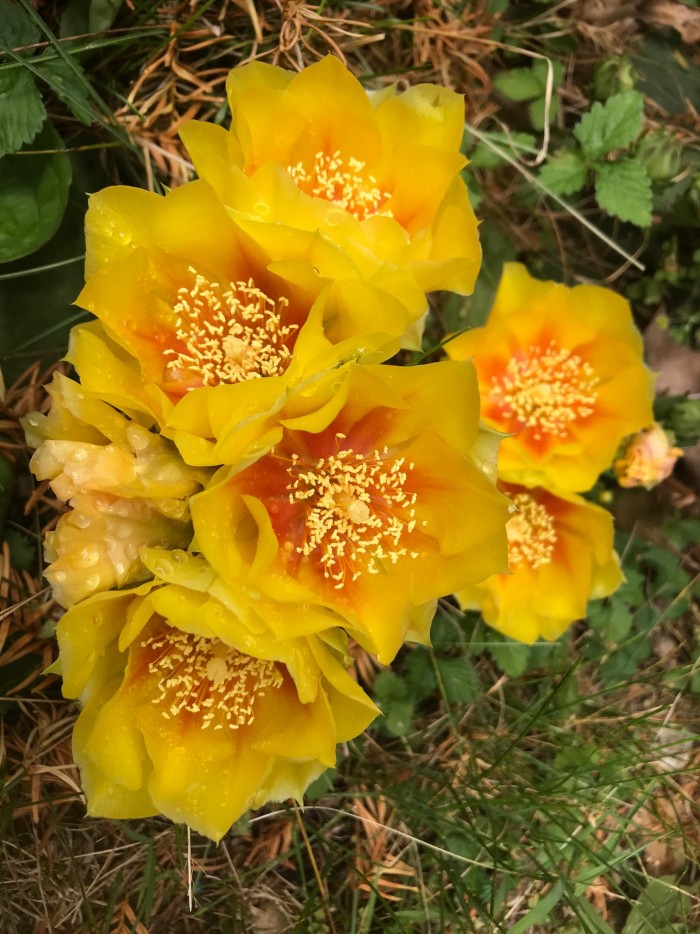


- [An Essay from My Heart] Beginning of Spring: The First Breath of Life in Stillness1192026.02.08
- [내 마음의 隨筆] <50년 만에 The Adventures of Huckleberry Finn을 읽고>2012026.02.13
- [An Essay from My Heart] Reading The Adventures of Huckleberry Finn After 50 Years1272026.02.13
- [An Essay from My Heart] Living Words on the Mississippi: The Southern Vernacular Humor of Huck Finn1162026.02.15
- [내 마음의 隨筆] <미시시피 강 위의 살아 있는 말들: ‘허클베리 핀’의 남부 구어체 유머>1302026.02.15
[An Essay from My Heart] Reading The Adventures of Huckleberry Finn After 50 Years
2026.02.13[An Essay from My Heart]
The Adventures of Huckleberry Finn After 50 Years>
More than fifty years ago, in my high school English class, a teacher of remarkable literary sensibility vividly introduced us—students worn down by the pressures of entrance examinations—to a short story by the famous American novelist Mark Twain (though I can no longer recall the title) and to John Steinbeck’s short novel The Pearl. Although I was in the science track, I had a deep interest in language and literature, and I found these works personally fascinating. I still vividly remember how much I admired Twain’s witty humor, satire, and sparkling creativity. Then, during the sweltering summer of 1993, I visited his hometown of Hannibal, a small rural town along the Mississippi River in the state of Missouri, during a family trip. As a keepsake, my wife gladly presented me with a collected edition of Mark Twain’s works as a gift. The Adventures of Huckleberry Finn was first published in 1884, and the edition included in the collected works was specially republished in the United States by the Book-of-the-Month Club in 1992, more than a century later. (406 pp.)
For various reasons, more than thirty years passed in what felt like the blink of an eye. Personally, after reading nearly all of Steinbeck’s major works in an effort to gain a deeper understanding of America, the American people, and American culture, I found myself wondering which author I should turn to next. Suddenly, I remembered the collected works of Mark Twain that had long stood on my bookshelf—almost as decoration—enduring the passage of many years as the legacy of a pioneering figure in American literature. At last, I formed an ambitious plan to read them all, one volume at a time. Beginning with his celebrated work, The Adventures of Huckleberry Finn, I finally experienced the quiet joy of reading his writings in English for the first time—leaping across a span of fifty years.
Huckleberry Finn (Huck Finn), under the guardianship of Widow Douglas and Miss Watson, receives an education meant to “civilize” him. Yet manners, religion, and rigid rules feel like suffocating restraints. Compounded by the violence and alcoholism of his father, Pap Finn, Huck comes to feel threatened by both society and family. In order to gain his freedom, he stages his own kidnapping and escapes to the Mississippi River.
On Jackson’s Island, Huck encounters Jim, a runaway slave. Jim has fled after learning he is about to be sold by Miss Watson. In the American South of that time, slavery treated Black people as property, easily stripping them of family and dignity. At first, Huck tries to follow the prejudices society has taught him. But living alongside Jim, he begins to recognize him as a human being—someone with fears, hopes, and deep affection.
The two travel southward on a raft along the river. The Mississippi was a central artery of trade and transport, and each dock and small town possessed its own accent, dialect, and customs. Life revolved around churches, markets, plantations, and taverns, and people valued honor and reputation. Within this culture, Huck witnesses both kindness and cruelty.
During their journey, Huck experiences the long-standing feud between the Grangerford and Shepherdson families. People who speak of religion while carrying rifles risk their lives for the sake of honoring the Southern code of pride appears deeply contradictory to him. Huck begins to distinguish between society’s polished exterior and its inner violence.
Later, Huck and Jim encounter two con men, the “King” and the “Duke.” Claiming to be dispossessed by nobles, they ask for protection, and Huck and Jim reluctantly allow them to join. Traveling from town to town, the pair deceive people through sham theatrical performances, sermons, and elaborate lies. Observing their schemes, Huck studies human greed and the foolishness of crowds.
The attempted fraud involving the Wilks family inheritance becomes a turning point. The King and the Duke pretend to be relatives from England to seize the gold. Seeing the innocence of Mary Jane and her sisters, Huck feels the pang of conscience. He secretly hides the gold in the coffin and buys time until the real relatives can appear. This marks his first clear act of following his own moral judgment rather than social law.
When the fraud is exposed, the King and the Duke are captured and punished by the townspeople, yet they are eventually released and rejoined Huck. Though Huck despises them, he cannot completely escape their presence within the confined world of the river. Quietly, he waits, judges, and prepares for an opportunity to free himself from them.
When Jim is captured and held by the Phelps family, Huck resolves to rescue him. At this point, Tom Sawyer appears and complicates the escape plan. Tom wishes to stage the rescue like a grand adventure story, while Huck desires a practical and direct solution. Their contrasting attitudes reveal different understandings of adventure and responsibility.
During the escape attempt, gunfire erupts and Tom is wounded. It is then revealed that Jim has already been legally freed. Tom knew this all along but prolonged the ordeal for the sake of excitement. Through this event, Huck clearly perceives the boundary between moral seriousness and childish play. Jim, who remains loyal and human throughout, earns Huck’s deep respect.
After everything is resolved, Huck refuses to return to civilized society. He decides instead to head west in search of a new life. Having witnessed the contradictions of slavery, the hypocrisy and honor culture of the South, fraud and violence, and the power of human compassion, Huck is no longer an innocent boy. Though the journey on the river ends, his search for conscience and freedom continues. Like the Mississippi itself, his life flows onward without stopping.
The lessons that can be drawn from The Adventures of Huckleberry Finn go beyond a simple “story of friendship” or the “fun of adventure.” They lead to a profound reflection on conscience, freedom, and the limits of social morality. The core lessons may be summarized as follows:
1. Society Is Not Always Right
Huck has been taught that helping a slave escape is a “sin.” However, as he lives alongside Jim, he comes to realize that this teaching is wrong.
Lesson: Morality does not begin with custom or majority opinion, but with understanding and empathy toward other human beings.
2. Conscience Is Not Taught but Discovered
Huck is not an educated boy. Nevertheless, he thinks for himself and makes his own choices. His decision—“All right, then, I’ll go to hell”—is a declaration that he will follow his inner voice rather than external authority.
Lesson: True morality arises not from outward commands, but from inward conviction.
3. Freedom Is Not a Declaration but a Practice
American society speaks of freedom, yet at the same time maintains slavery. The novel exposes this contradiction.
Lesson: Freedom is not a value proclaimed in words, but one fulfilled through the recognition and protection of others’ freedom.
4. A Person Is Defined by Relationship, Not Status
The moment Huck stops seeing Jim as a “slave” and begins to see him as a “friend,” the standard of morality shifts.
Lesson: A person becomes truly human not through institutional labels (slave, white, poor), but through relationships.
5. Civilization Is Not Always Just
Refined families, churchgoing citizens, and even con men posing as aristocrats all reveal hypocrisy. The novel shows that “civilization” does not necessarily guarantee moral righteousness.
Lesson: The more orderly and cultured a society appears on the surface, the more carefully its injustices must be questioned.
6. The Meaning of Growth
Huck’s growth is not measured by formal education or social success. He learns to judge for himself and to take responsibility for his choices.
Lesson: Growth is not conformity to rules, but the courage to choose what one believes is right.
The greatest message this novel leaves us with is this:
“Morality begins not with institutions, but with compassion for human beings.”
Huck is not a philosopher, yet his choice tests the morality of an entire society. He does not change the world, but he changes his own judgment. And that small change is the true heart of the novel.
The line most frequently quoted as the most dramatic sentence in The Adventures of Huckleberry Finn is the following:
“All right, then, I’ll go to hell.”
This line appears immediately after Huck writes a letter to betray Jim’s whereabouts—only to tear it up in the end.
According to the morality taught by society and religion, he believes he is committing a “sin.”
Yet he rejects all of those doctrines and chooses Jim.
This single sentence is not merely an act of rebellion.
It is a declaration that he will choose personal conscience over social salvation, and the moment when a boy first takes responsibility for his own moral judgment.
Though brief, it is a scene in which the ethical tension of the entire novel is powerfully condensed. ***
February 13, 2026
At Sungsunjae (崇善齋)
{Solti}
한국어 번역: https://www.ktown1st.com/blog/VALover/348409



-
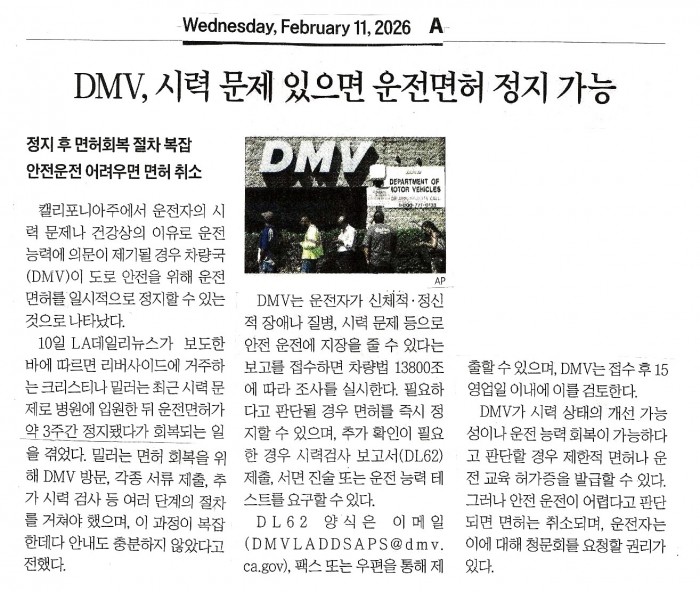 점점 달라지는 자동차 법령
나이를 먹어 가면서 가장 어려운 것은타고 다니는 자동차에 관련된 법령이다.점점 옥죄어 들어오는 과정들이 참으로견디기에는 힘이 들고 여러가지 어려움.나이가 드니 방어 능력도 덩달아…
점점 달라지는 자동차 법령
나이를 먹어 가면서 가장 어려운 것은타고 다니는 자동차에 관련된 법령이다.점점 옥죄어 들어오는 과정들이 참으로견디기에는 힘이 들고 여러가지 어려움.나이가 드니 방어 능력도 덩달아…
-
 Best Transformer Manufacturer Company India Distribution Transformer Manufacturer Greater Noida
Looking for the best transformer producer organization in India? Tirupati Transformers is a relied …
Best Transformer Manufacturer Company India Distribution Transformer Manufacturer Greater Noida
Looking for the best transformer producer organization in India? Tirupati Transformers is a relied …
-
 2026년 서머타임 안내
또 다시 헷갈리게 할 수도 있는서머타임의 시작이 바로 눈앞에~!2026년3월8[일]일부터 한 시간 더~잠자리에 머물 수 있기는 좋기는 하겠다.늘 건강하기
2026년 서머타임 안내
또 다시 헷갈리게 할 수도 있는서머타임의 시작이 바로 눈앞에~!2026년3월8[일]일부터 한 시간 더~잠자리에 머물 수 있기는 좋기는 하겠다.늘 건강하기
-
 레몬법(Lemon Law)에 따른 소비자 권리는 무엇인가?
캘리포니아 레몬법은 ‘송-베벌리 소비자 보증법(Song-Beverly Consumer Warranty Act)’의 일부로, 결함이 있는 새 차를 구매하거나 리스한 소비자들을 강력…
레몬법(Lemon Law)에 따른 소비자 권리는 무엇인가?
캘리포니아 레몬법은 ‘송-베벌리 소비자 보증법(Song-Beverly Consumer Warranty Act)’의 일부로, 결함이 있는 새 차를 구매하거나 리스한 소비자들을 강력…
-
 [내 마음의 隨筆] <늦추위 속에서 피어나는 정관(靜觀)의 봄>
[내 마음의 隨筆]<늦추위 속에서 피어나는 정관(靜觀)의 봄>이른 아침(早朝), 뒷뜰(後庭)에 나가 마주한 풍경(風景)은 고요(靜寂)하면서도 어딘가 긴장(緊張)된 기운(氣運)을 …
[내 마음의 隨筆] <늦추위 속에서 피어나는 정관(靜觀)의 봄>
[내 마음의 隨筆]<늦추위 속에서 피어나는 정관(靜觀)의 봄>이른 아침(早朝), 뒷뜰(後庭)에 나가 마주한 풍경(風景)은 고요(靜寂)하면서도 어딘가 긴장(緊張)된 기운(氣運)을 …
-
 The heart that tends the flowers Lyrics by Don Kim
 When the sun rises slowly I learn devotion, tend…
The heart that tends the flowers Lyrics by Don Kim
The heart that tends the flowers Lyrics by Don Kim When the sun rises slowly I learn devotion, tend…
-
101.LA 한인회 문화의 샘터 가슴 설레는 생활 문학 ‘디카시’ 101. 가슴설레는 생활 문학 ‘디카시LA 한인회‘문화의 샘터’ 소개LA 한인회(회장 로버트 안)는 1962년 설립된 이후 지역사회와 함께 성장하며, 동포들의 권익보호&middo…
-
 청송≤전국구 출장안마≥라인:LUP25√청송출장콜걸√청송출장마사지√청송모텔출장알바√청송24시예약상담√
 청송≤전…
청송≤전국구 출장안마≥라인:LUP25√청송출장콜걸√청송출장마사지√청송모텔출장알바√청송24시예약상담√
청송≤전국구 출장안마≥라인:LUP25√청송출장콜걸√청송출장마사지√청송모텔출장알바√청송24시예약상담√ 청송≤전…
-
 College Decision Day 5월 1일 임박! 명문대 Waitlist 합격을 위한 마지막 승부수
안녕하세요. 보스턴 에듀케이션입니다.5월 1일(College Decision Day)이 다가오면서, 명문대 대기자 명단(Waitlist) 결과를 두고 애태우는 분들이 많으실 겁니…
College Decision Day 5월 1일 임박! 명문대 Waitlist 합격을 위한 마지막 승부수
안녕하세요. 보스턴 에듀케이션입니다.5월 1일(College Decision Day)이 다가오면서, 명문대 대기자 명단(Waitlist) 결과를 두고 애태우는 분들이 많으실 겁니…
-
 2026년 03월 28일 대한민국 코트디부아르 중계 시청하기
⬇ 2026년 03월 28일 대한민국 코트디부아르 중계시청하기???? https://m.site.naver.com/246i3???? 위치: 영국 밀턴킨스 스타디움 MK (Stad…
2026년 03월 28일 대한민국 코트디부아르 중계 시청하기
⬇ 2026년 03월 28일 대한민국 코트디부아르 중계시청하기???? https://m.site.naver.com/246i3???? 위치: 영국 밀턴킨스 스타디움 MK (Stad…

Ktown1번가 대표이메일 webinfo@koreatimes.com | 업소록 문의 yp@koreatimes.com
Powered by The Korea Times. Copyright ©The Korea Times All rights reserved.